Begin with the neighbourhood
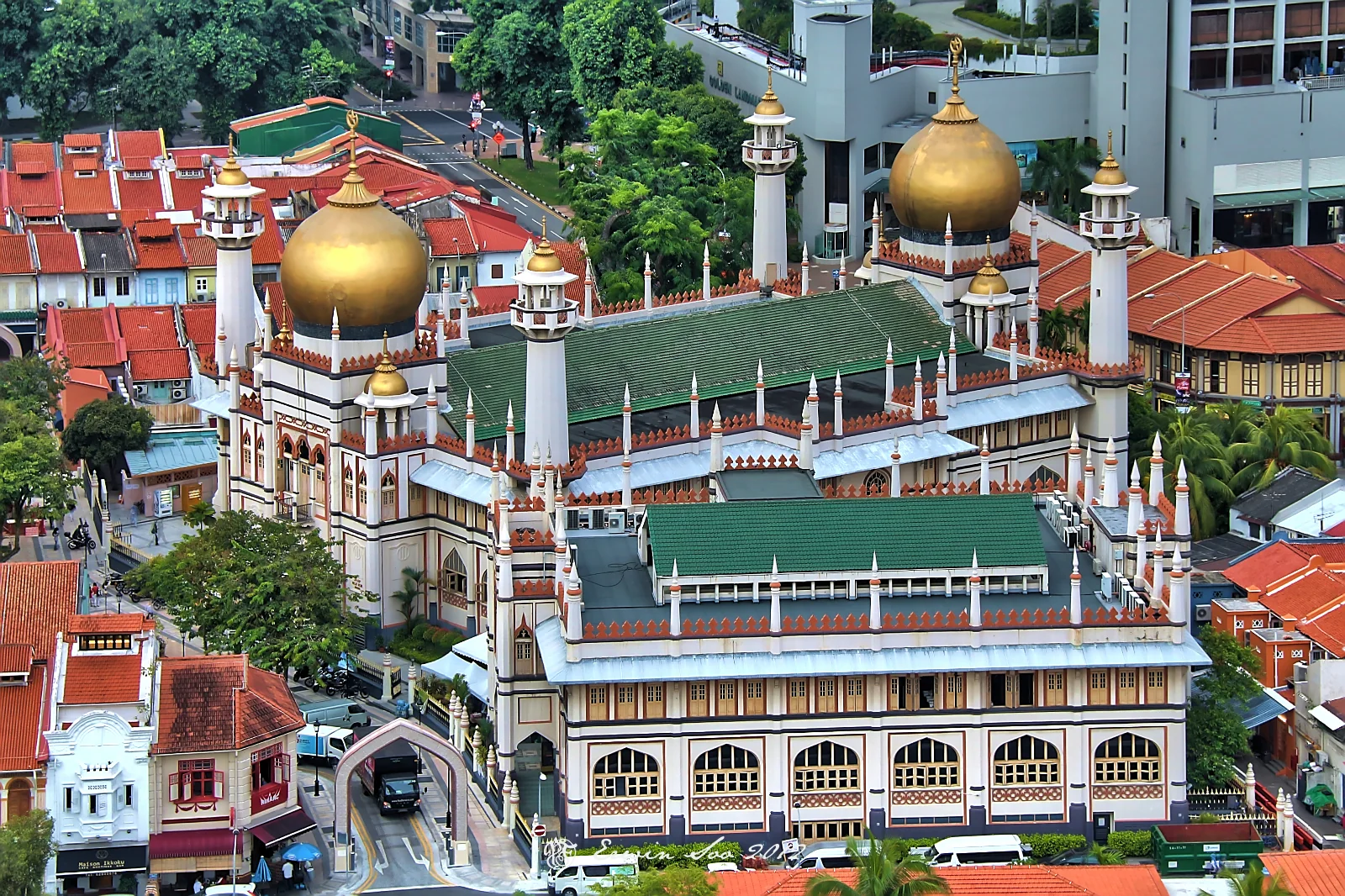
Kampong Gelam asks for a different kind of walk. The golden dome of Sultan Mosque, richly painted shophouses and the tight pull of Haji Lane make it tempting to treat the area as a sequence of frames. Yet the official Kampong Gelam guide calls it one of Singapore’s oldest urban quarters and identifies Sultan Mosque as a focal point for the Muslim community. That is the useful starting point: worship, errands, trade and sociability continue alongside visitors.
Working Title has a small local echo here. A CNN feature on the district once described a café of that name beneath a hostel. It is a historical footnote, not a claim on a present-day venue; the neighbourhood has always contained more interesting work than a single address.
Read Arab Street at working pace
On Arab Street, look past the display window. Fabrics, trims and scent are not simply a design mood. The National Heritage Board notes that Arab Street was a textile hub in the 1970s and 1980s and remains home to fabric and batik businesses; nearby, shops serving Hajj and Umrah needs and makers of non-alcoholic fragrance continue a related local trade. Its Kampong Gelam heritage-business project documented 45 participating businesses, while making clear that its map was not exhaustive.
That last detail matters. A shopfront is not scenery waiting to be improved by a caption. Enter with a question if you have one, ask before handling textiles, and accept that a proprietor may be busy. Buying thoughtfully is more useful than treating every counter as a prop. Even a brief conversation can shift the pace from collecting impressions to noticing knowledge: a fabric’s feel, a garment’s cut, a fragrance chosen for a purpose.
Visit Sultan Mosque as a guest
Sultan Mosque is an architectural landmark, but it is first a place of worship. The mosque’s official visitor guidance asks guests to be properly attired, remove footwear, maintain silence and observe cleanliness. It also limits visitors to permitted areas; the main prayer hall and second-floor prayer hall are not open for independent entry. Non-flash photography is allowed, while video recording requires approval.
The graceful approach is uncomplicated: arrive in modest clothing, take direction from the counter staff, keep voices low and put the camera away when the setting calls for it. If access changes or the mosque is in use, do not negotiate the point. Prayer and community use come before an itinerary. The same principle extends into the surrounding streets, where people are meeting, working, shopping and getting on with ordinary days.
Put Haji Lane in proportion
Haji Lane deserves its place on the route. Visit Singapore describes it as an indie neighbourhood of boutique fashion, independent businesses and murals by local and international artists. Its colour and small-scale energy are part of Kampong Gelam’s present tense. But the lane is strongest when it is one chapter, rather than the whole story.
Give it time without making it a performance. Photograph walls rather than strangers, keep doorways and narrow pavements clear, and do not assume a café table is a staging area. Then take another turn: towards a fabric merchant, a bookshop, a prayer facility or a quieter side street. The point is not to reject the contemporary scene. It is to let it sit beside the older rhythms that make the area legible.
Let lunch be part of the walk
A meal can be the most direct way to understand that this is a lived-in district. The heritage record describes family food businesses that grew from pushcart beginnings into established restaurants, and notes that Minangkabau-style nasi padang is among the area’s enduring food traditions. Visit Singapore’s district guide likewise points to Malay and Indonesian cooking in Kampong Gelam. These are reminders to choose lunch as more than a pause between photographs.
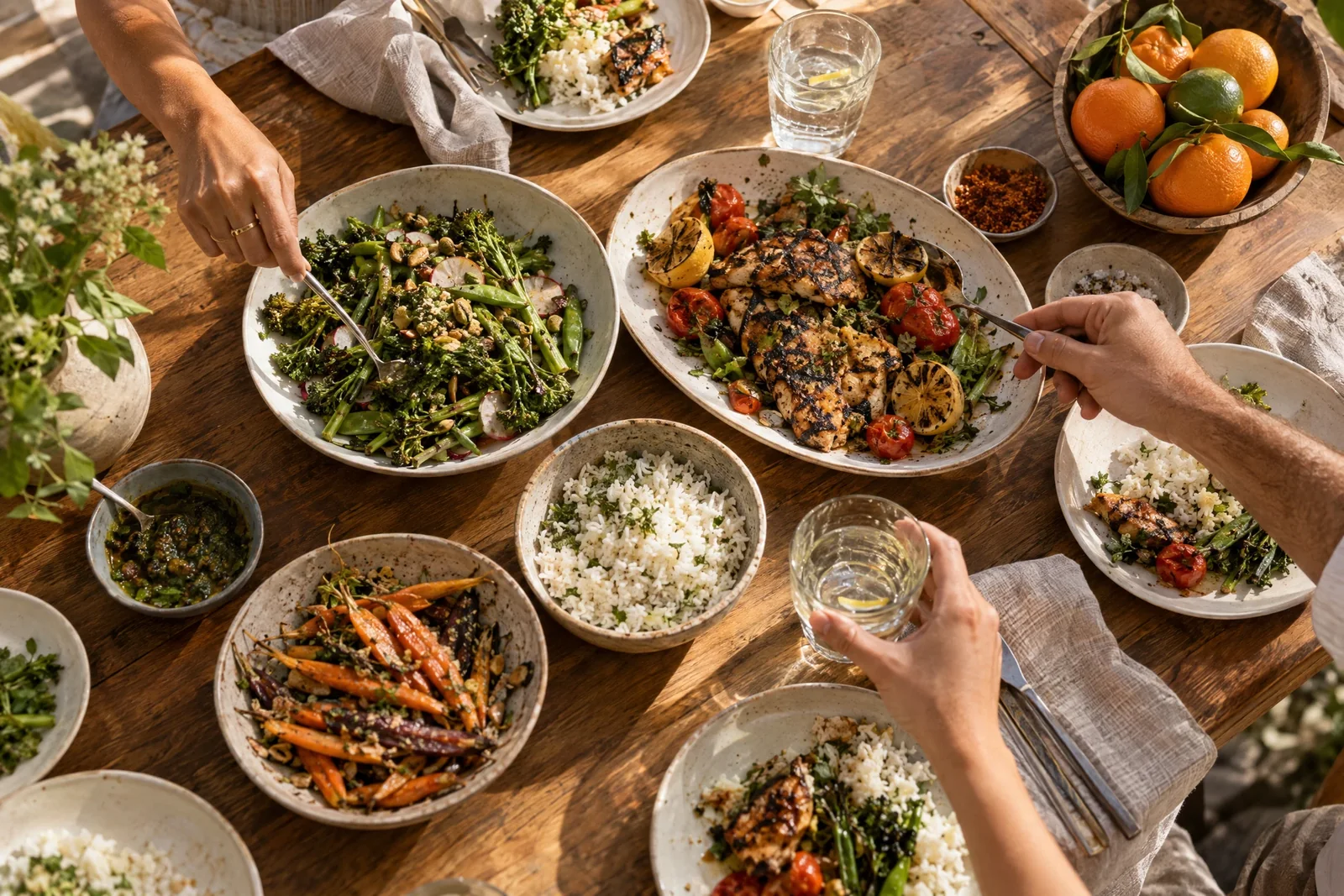
Read the menu, join the queue without rushing it, and ask clearly if you have a dietary requirement. At a nasi padang counter, choose what you will eat rather than assembling an edible checklist. Share a table when it is offered, give staff room to work, and let the meal set the pace for the next block. Food here carries domestic memory, migration, skill and regular custom; it does not need to be made exotic to be worth paying attention to.
Leave space for everyday life
Respectful visiting is not a solemn exercise. It is simply a practical way of recognising that Kampong Gelam’s appeal depends on the people who keep returning to it. Before setting out, a short check can help:
- Visit the mosque as a guest, following its current guidance and staff direction.
- Make room on pavements, at entrances and around working shop counters.
- Spend with care: choose one meal, craft or useful purchase over a rush of images.
Kampong Gelam offers colour, texture and excellent reasons to linger. Its greater gift is the chance to see a destination as a neighbourhood—one whose history remains active because people still pray, trade, cook and gather here.